A Beginner Bodyweight Workout You Can Do at Home

A chair, a wall and a few controlled repetitions are enough to begin practicing strength movements. This introductory session is designed to help you learn the exercises before adding more difficulty.
What you need
Allow about 15–20 minutes. Use a sturdy chair against a wall, a clear wall space and shoes or a surface that will not slip. Begin with three minutes of easy walking or marching and gentle arm movements.
Try one round first
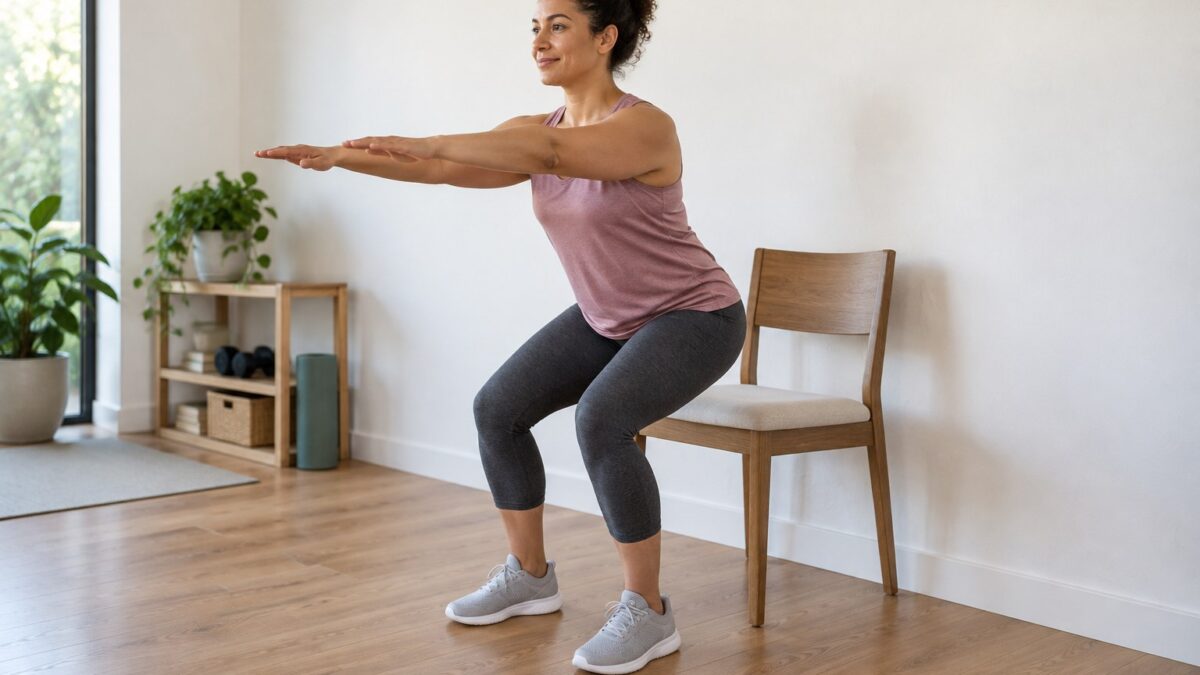
- Chair sit-to-stand: 6–8 repetitions. Sit toward the front of the chair with feet flat and comfortably apart. Lean forward slightly from the hips, press through your feet and stand. Sit down slowly. Use the armrests or your hands for assistance when needed.
- Wall push-up: 6–8 repetitions. Place palms against the wall around shoulder height, slightly wider than shoulders. Step back a comfortable distance. Bend your elbows to bring your body toward the wall, then press away. Keep your body in a long line and avoid letting the lower back sag.
- Supported heel raise: 8 repetitions. Hold the chair back, rise onto the balls of your feet and lower slowly. Keep the movement small if balance is challenging.
- Standing side leg lift: 6 repetitions per side. Hold the chair, stand tall and lift one leg a little out to the side with toes facing forward. Lower with control without leaning the trunk.
Rest and progress gradually
Rest for 45–60 seconds between exercises, or longer until breathing is comfortable. Finish with two minutes of easy walking. On another day, if one round feels comfortable and your technique remains steady, try a second round. Keep at least a day between these sessions at first. Exhale during effort and avoid holding your breath.
What this session covers
This is an introductory selection, not a complete program for every major muscle group. As you gain confidence, a qualified trainer can help you add pulling and hip-hinge movements. Increase one variable at a time: repetitions, rounds or difficulty.
Work within your starting point
These are general adult exercise ideas, not an injury-rehabilitation plan. Keep movements comfortable and stop if you develop pain, dizziness or unusual breathlessness. If you are pregnant, recovering from surgery or managing a condition that affects exercise, ask a qualified professional about suitable changes.