A 10-Minute Balance Practice with Chair Support

Balance practice does not need dramatic one-leg poses. Start close to stable support, make small weight shifts and choose a stance that lets you remain in control.
Make the space safe
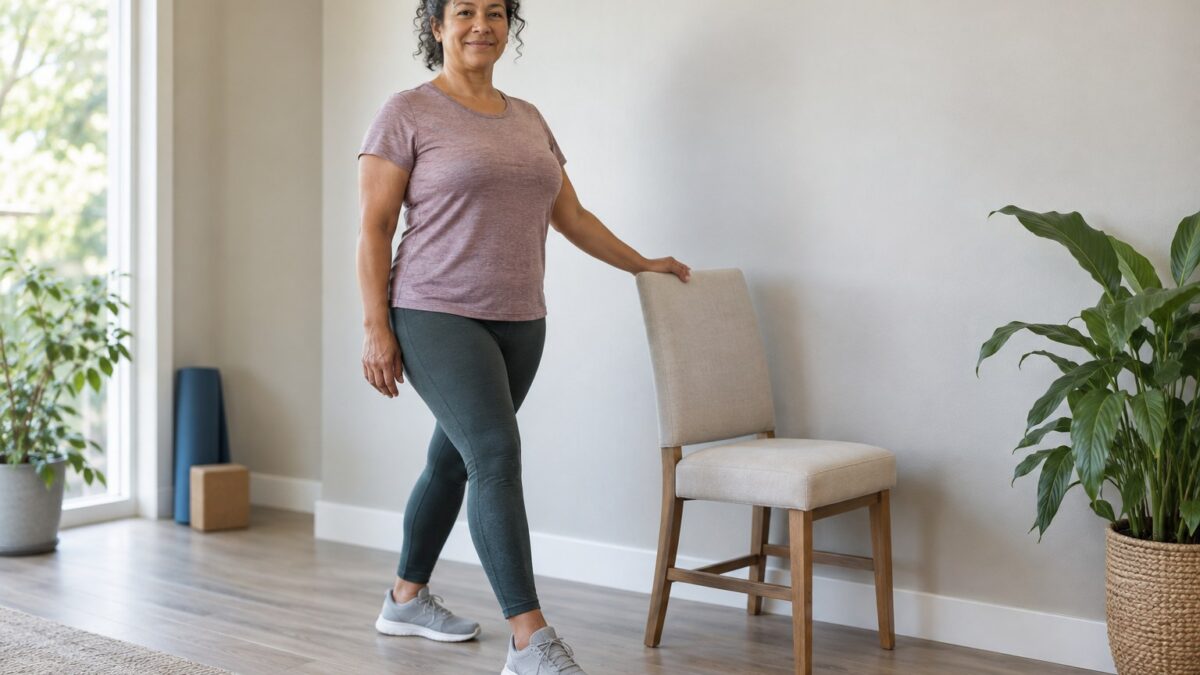
Use a sturdy chair secured against a wall or a fixed kitchen counter on a level, nonslip surface. Clear trip hazards and keep support within easy reach. Wear secure footwear. If you have frequent falls, vertigo or major balance difficulties, seek an assessed program rather than practicing alone.
Your ten-minute practice
- Minutes 0–2: supported warm-up. Hold the support and gently march in place, lifting the feet only a little. Pause whenever you need to.
- Minutes 2–4: side-to-side shifts. Keep both feet on the floor, roughly hip-width apart. Slowly shift a little weight toward one foot and then the other. Keep the trunk upright and avoid leaning far sideways.
- Minutes 4–6: staggered standing. Put one foot a small step ahead of the other, leaving space between them for stability. Hold for 10–20 seconds, rest and change the leading foot. Keep a hand on support.
- Minutes 6–8: small heel raises. With both hands on support if necessary, rise slightly onto the balls of your feet and lower slowly. Try five repetitions, rest and repeat only if comfortable.
- Minutes 8–10: finish easily. Return to ordinary standing or sit down. Add a few gentle ankle movements and allow breathing to settle.
Progress without removing your safety net
First aim for smoother movement and easier holds. If practice becomes comfortable, use a little less hand pressure while keeping support immediately available. There is no need to close your eyes, stand on a cushion or remove support to make this useful practice.
Stay within your ability
Stop if you feel dizzy or unsteady beyond your control. Balance changes can have many causes; persistent or new problems warrant professional assessment. The time blocks are maximum practice windows, not continuous holds. Rest within each block as needed.