Beginner Core Stability: Four Controlled Exercises

Core practice is about controlling movement while breathing normally. These four low-load exercises offer a starting point without long holds, fast repetitions or a promise of a flatter stomach.
Prepare your space
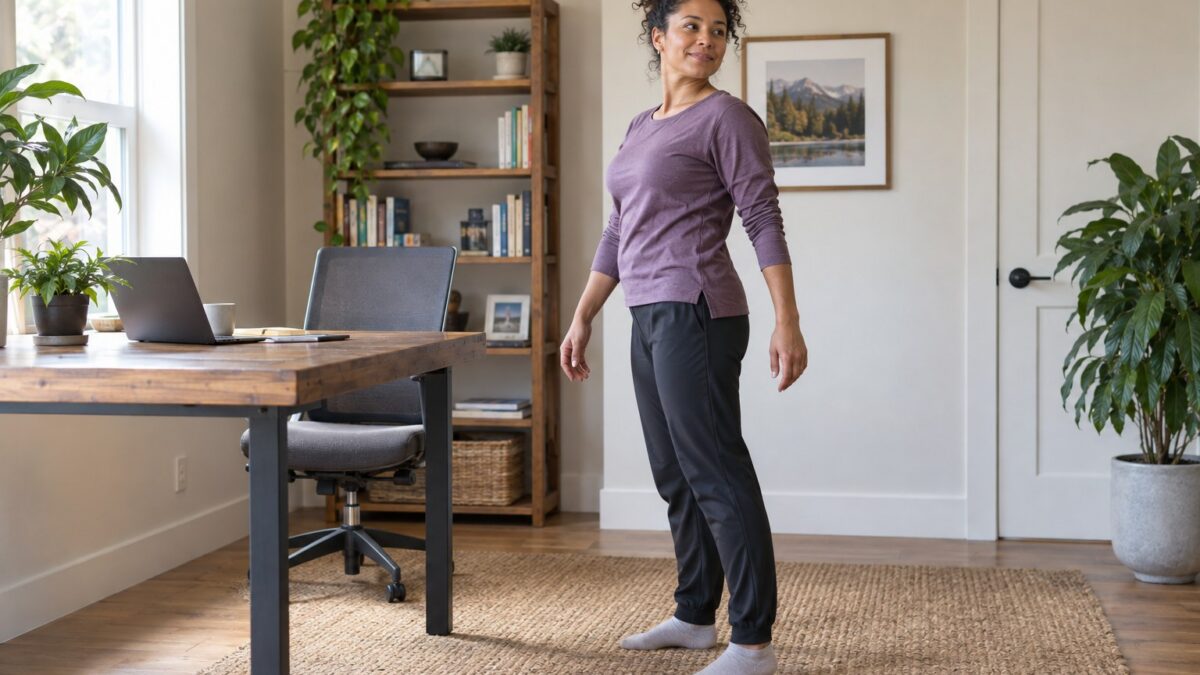
Use a mat and a folded towel for knee padding. Spend two minutes walking or marching gently before starting. Allow about 10–15 minutes overall, including rests and position changes.
Four movements to practice
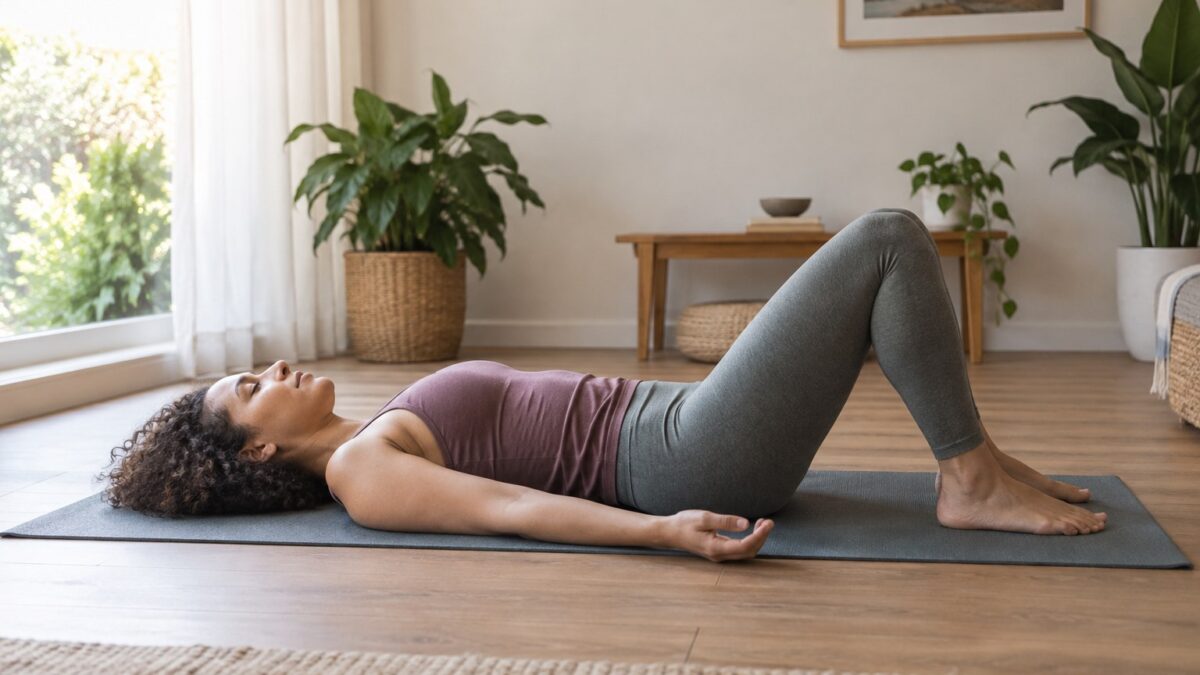
- Gentle abdominal engagement: 5 breaths. Lie on your back with knees bent and feet flat. Lightly firm the muscles around your waist as though preparing for a small cough. Keep breathing; do not pull in hard or flatten your back forcefully. Release between breaths.
- Heel slide: 5 repetitions per side. From the same position, slowly slide one heel away along the mat. Move only as far as you can without the pelvis tipping noticeably. Slide back and switch sides.
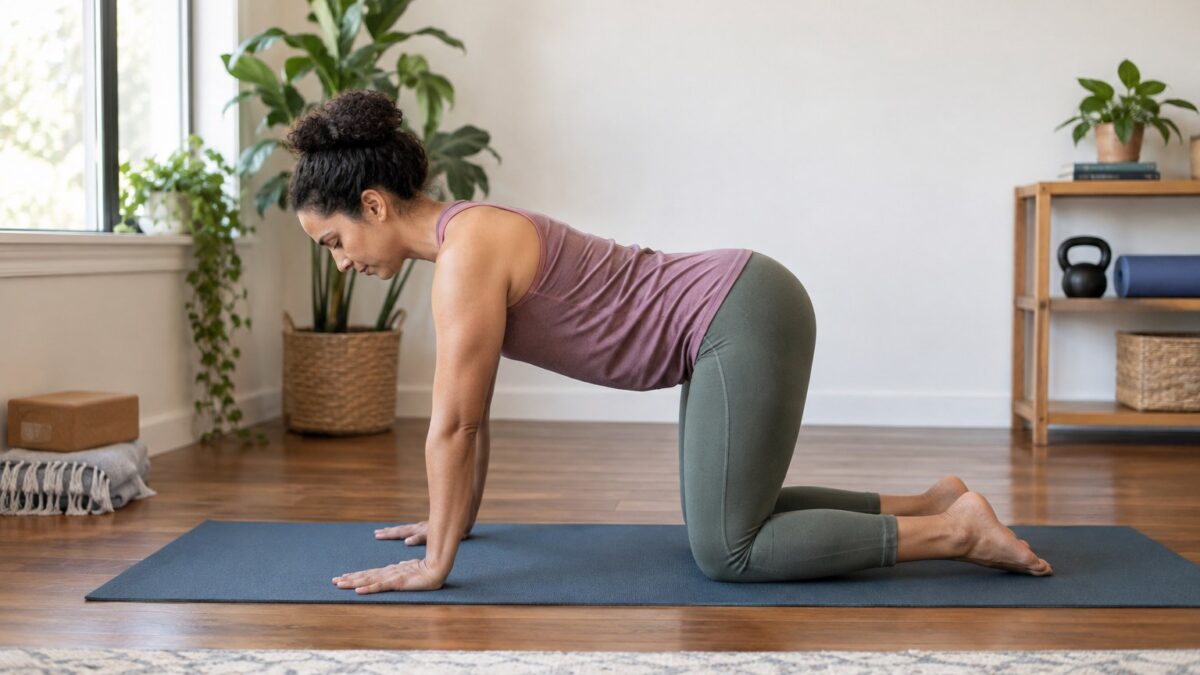
- Tabletop arm reach: 5 repetitions per side. Move onto hands and knees, with hands under shoulders and knees under hips. Keep your trunk steady while sliding one hand forward along the mat. Return and alternate. Lift the hand only if this is easy and pain-free.
- Small bridge: 5–8 repetitions. Lie on your back again with knees bent. Press through your feet and lift your hips a little, stopping before your back arches. Pause briefly, then lower slowly. A small lift is enough.
Use less effort than you expect
Rest for 30–60 seconds between movements. Try one round and finish with a minute of easy walking. Shaking, breath-holding or rushing are signs to reduce the range or stop the set. Add repetitions only after the movement feels controlled.
Modify when needed
If hands-and-knees work is uncomfortable, skip the tabletop exercise and repeat gentle breathing in a supported position. These movements are not a treatment plan for back pain, a hernia, pelvic-floor symptoms or recovery after birth or surgery. A physiotherapist can tailor exercise when those concerns apply.
Know when to stop
These are general adult exercise ideas, not an injury-rehabilitation plan. Keep movements comfortable and stop if you develop pain, dizziness or unusual breathlessness. If you are pregnant, recovering from surgery or managing a condition that affects exercise, ask a qualified professional about suitable changes.